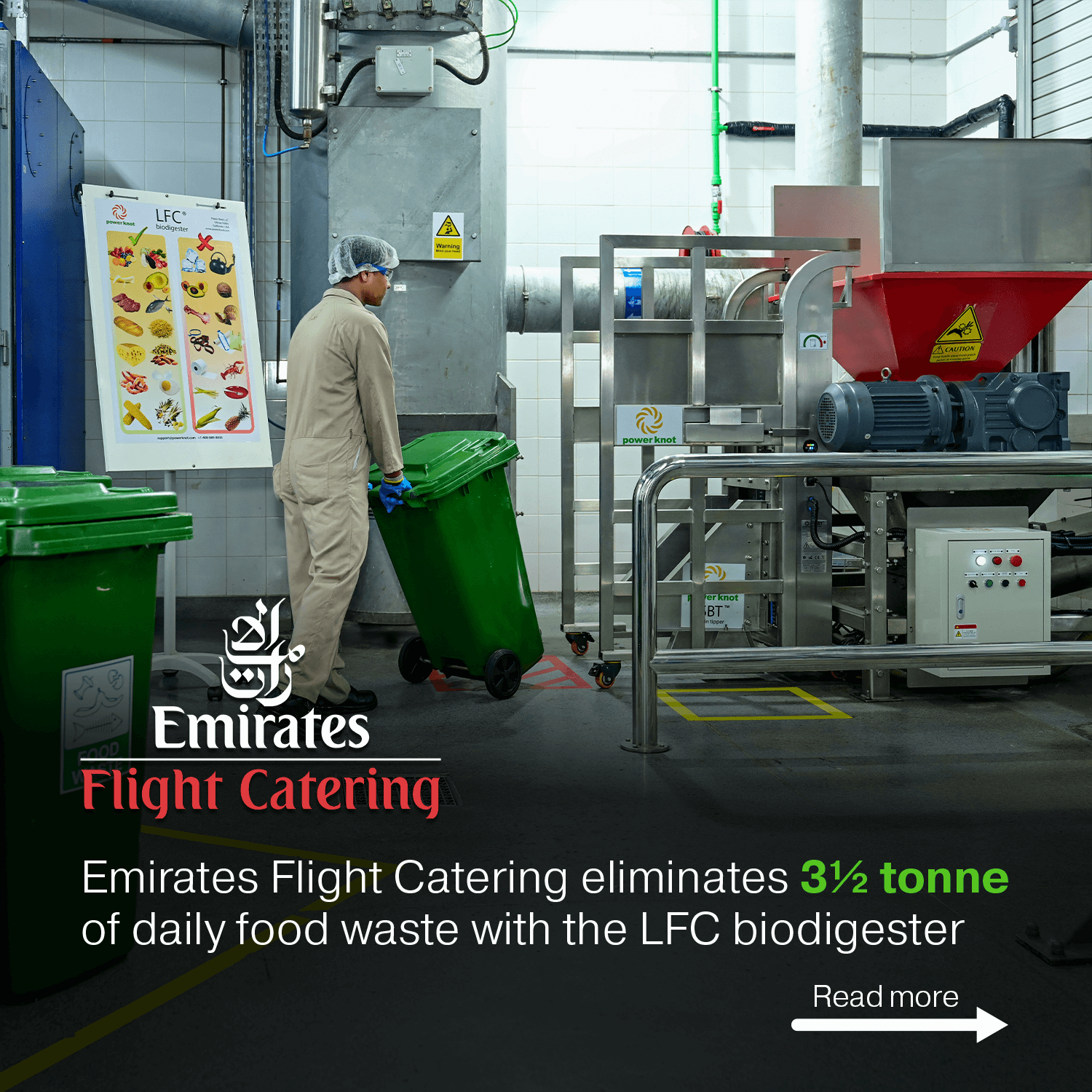

In any facility that handles bulk materials, the “last mile” of waste or product management is often the most dangerous and inefficient: emptying heavy bins into larger containers or processing units. This is where a bin tipper (also known as a bin lifter or cart dumper) becomes an essential asset.
By automating the lifting and inverting process, businesses can protect their employees and streamline their operations. In this guide, we explore the different types of bin tippers, their industry-specific applications, and why selecting the right standard is critical for your facility.
What is a bin tipper?
A bin tipper is a specialized mechanical device designed to lift, tilt, and empty heavy bins or carts. These machines are engineered to handle loads that may be physically impossible or unsafe for a human to lift manually.
From waste management and food processing to chemical manufacturing, bin tippers are the backbone of efficient material handling. They transition your workflow from a labor-intensive chore to a seamless, push-button process.
Understanding bin tipper standards: which one do you need?
Not all bins are created equal. Depending on your industry and geographic location, your equipment must adhere to specific international standards to ensure a secure “lock” during the tipping cycle.
EN 840-Compliant (Comb-Lift)
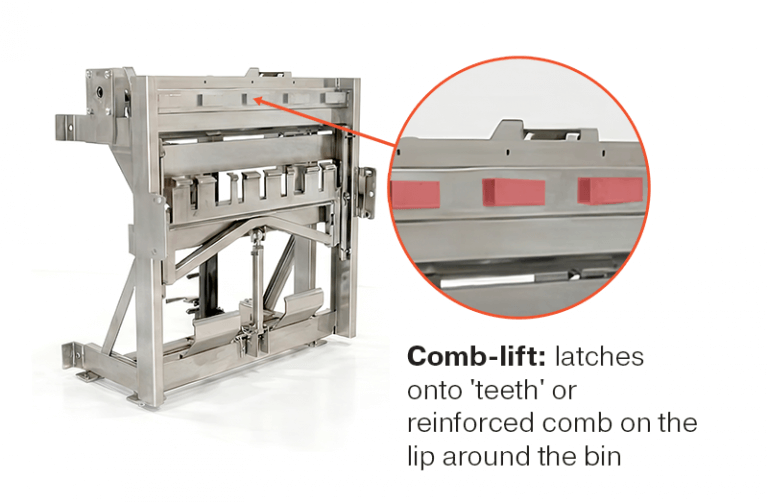
Commonly found in Europe, Asia, and Australasia, these tippers utilize a comb-lift mechanism. The lifter features a row of “teeth” that latch onto the reinforced combing at the front lip of the bin. These types of bins may commonly be called “wheelie bins” or mobile garbage bins (MGBs).

ANSI Z245.60 Type B (Front-Lift)
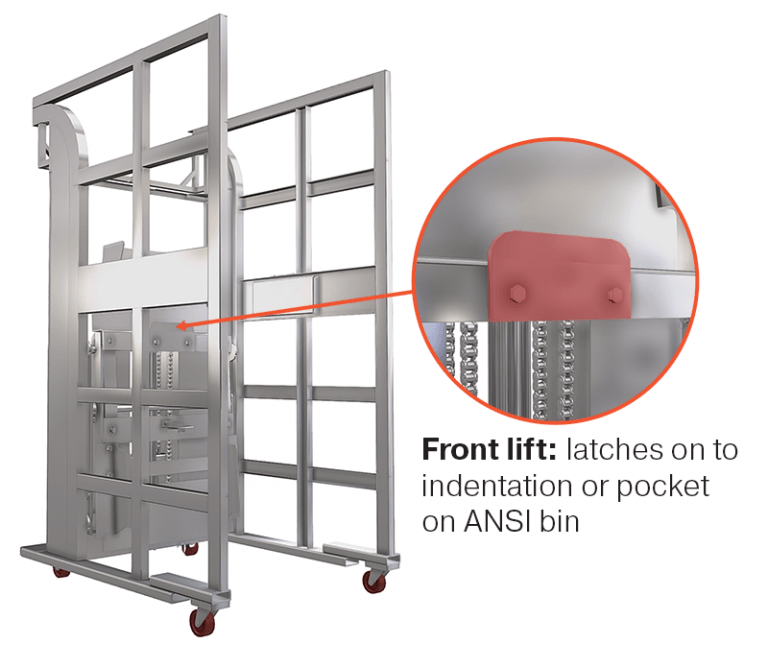
This is the standard for North American waste management. Type B tippers use a front-lift mechanism that latches onto a specific molded indentation or “pocket” on the front of the bin. A rail that is half way up the front is used to stop the bin from falling over once tipped.
Power Knot’s SBT-140 bin tippers can be purchased to lift either EN-840 or ANSI bins, making them the perfect fit for the toters, waste carts, and trash cans used in facilities around the world.

DIN 9797-Compliant (Trunnion-Lift)
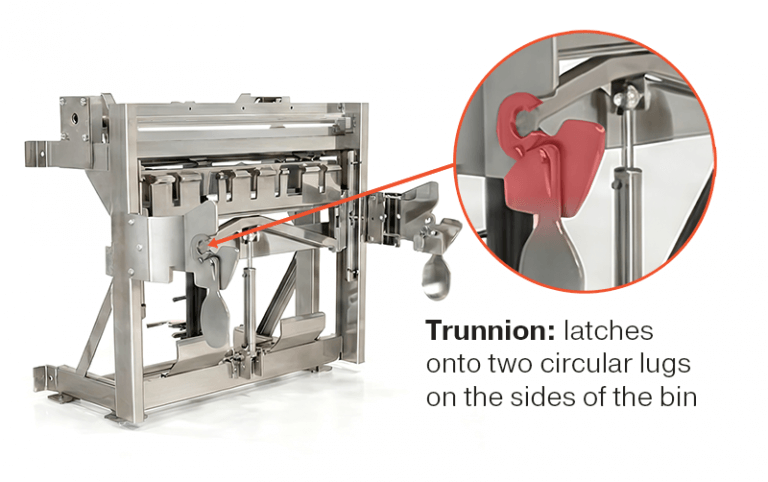
Specific to the food-processing and pharmaceutical industries, these tippers use a trunnion-lift mechanism. The machine latches onto two circular lugs (trunnions) projecting from the sides of the bin. These are almost exclusively used for stainless steel “Euro bins” or meat carts.

Which businesses should use a bin tipper?
If your team is manually lifting more than 16 kg (35 lb) multiple times a day, your business is a candidate for a bin tipper. Key industries include:
- Hospitality & Food Service: Moving food waste or bulk ingredients.
- Manufacturing: Handling raw materials like wood scraps, plastic pellets, or metal shavings.
- Facility Management: Streamlining the collection of trash and recyclables in large complexes.
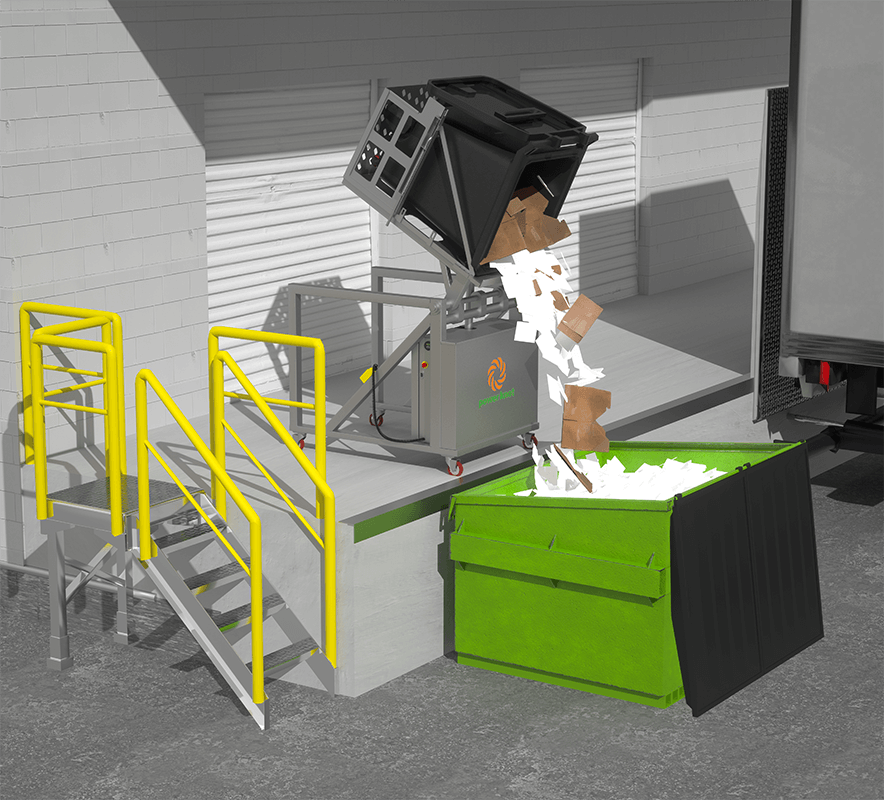
- Data Destruction: Transporting heavy loads of paper for secure shredding.
4 Major Benefits of Using a Bin Tipper
1. Increase Efficiency in Waste Handling


Manual tipping is slow and exhausting. A mechanical bin tipper can complete a full cycle in seconds, allowing staff to return to high-value tasks immediately.
2. Minimize Touch Points


In environments where hygiene is paramount, such as food processing or medical facilities, bin tippers reduce the need for workers to come into direct contact with the waste or the interior of the bins.
3. Reduce Operational Costs

By automating the lifting process, you can often reallocate labor to more productive areas of the business. Additionally, you reduce the “indirect costs” associated with damaged bins or spilled waste that requires extra cleanup.
4. Decrease Risk of Workplace Injuries

Back and shoulder strains from manual lifting are among the most common (and expensive) workplace insurance claims. A bin tipper removes the physical strain, ensuring your team stays healthy and your insurance premiums stay low.
Critical Features to Consider
When shopping for a bin tipper, look for these mandatory features to ensure longevity and safety:
- Battery powered: Opt for a battery-operated model to allow for cordless operation. This eliminates trip hazards and allows the machine to be moved wherever the work is, rather than being tethered to a wall outlet.
- Stainless steel construction: In many environments, plastic or painted steel may be unacceptable because it will degrade. Stainless steel is the superior choice; it prevents rusting, is easy to sanitize, and offers the rigidity required for heavy industrial loads.
- Advanced safety features: At a minimum, your tipper should include a high-visibility emergency stop button. If the operator is close to the moving parts, a machine should require both hands to operate which ensures that an arm cannot be near a moving part.
Power Knot’s SBT bin tippers have all these features as a result of rigorous R&D and product refinement from customer feedback. Our SBT-360 bin tipper was also designed to lift within the constraints of a standard truck to better assist with the needs of various data destruction companies.

Optimize Your Operations with Power Knot
Choosing the right lifting equipment is an investment in your company’s future productivity and employee well-being. Power Knot’s SBT bin tippers are built to withstand the rigors of industrial use while meeting strict North American ANSI safety standards, with customer-focused features.
Ready to transform your material handling? Contact Power Knot today to find the perfect bin-tipping solution for your business.