
Global catering powerhouse
Founded on excellence and innovation, EKFC has expanded its capabilities to serve not only airlines but also airport lounges and large-scale events. Its state-of-the-art Emirates Flight Catering Centre supports diverse culinary needs across 120 international airlines and 25 lounges at Dubai Airports, delivering high-quality meals with efficiency and precision. In 2005, EKFC expanded its capabilities with the opening of Food Point, a 10,000 m² facility capable of producing 30 million meals annually. One year later, a dedicated Emirates Airline catering unit was launched, adding a daily capacity of 115,000 meals. While this original facility has since been repurposed, it continues to support a growing portfolio of international airlines, demonstrating EKFC’s ability to scale without compromising quality.
Holistic Circularity and Innovation
EKFC’s “Zero Waste” goal is supported by a multi-layered technological approach:
- Circular Culinary Design: Chefs have developed 47 unique recipes specifically to repurpose production trimmings into high-quality meals.
- AI and Automation: Smart camera technology and AI-driven systems monitor production quality to prevent waste before it occurs.
- Clean Energy & Fleet: EKFC generated 4,000 MWh of solar power last year (avoiding 1,600 tonnes of CO2e) and is debuting the region’s first electric hi-loader by mid-2026.
- Plastic Reduction: Packaging overhauls have successfully eliminated 45,000 kg of plastic annually.
- Vertical Integration: In February 2024, EKFC acquired Bustanica (formerly Emirates Crop One), the world’s largest indoor vertical farm, strengthening food security and sustainability across its supply chain.
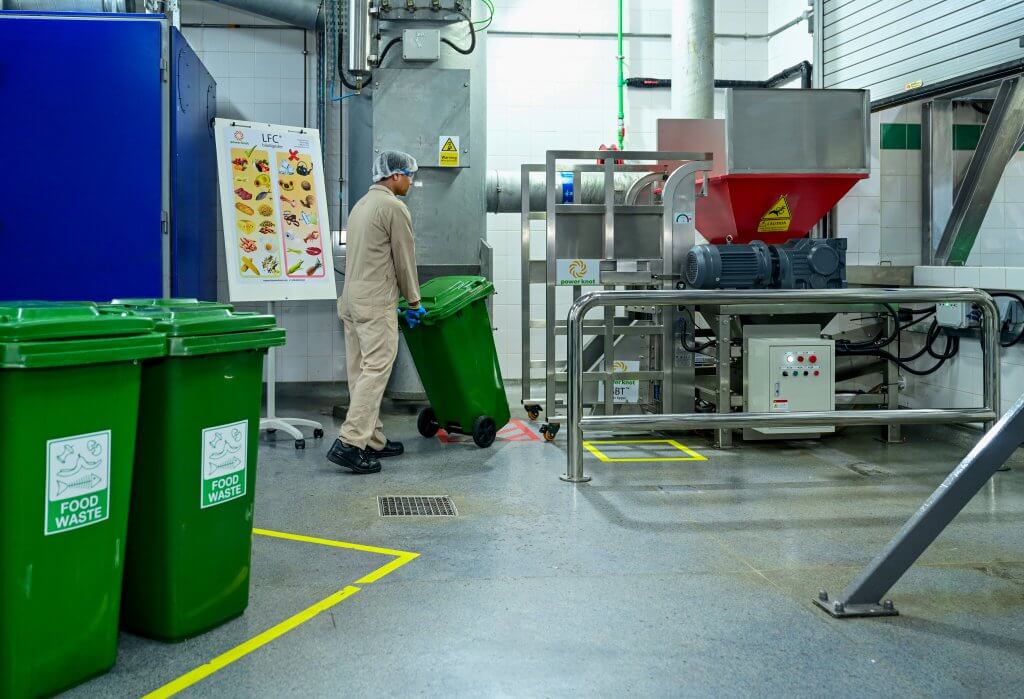
- Centralized Waste Management: Installation of an automated waste management system from Power Knot enables EKFC to fully own its waste processing and progress toward zero waste to landfill.
Pioneering Large-Scale Waste Digestion
In a landmark advancement for the aviation catering industry, EKFC has successfully scaled its waste management strategy from a biodigester pilot to an industrial scaled solution. 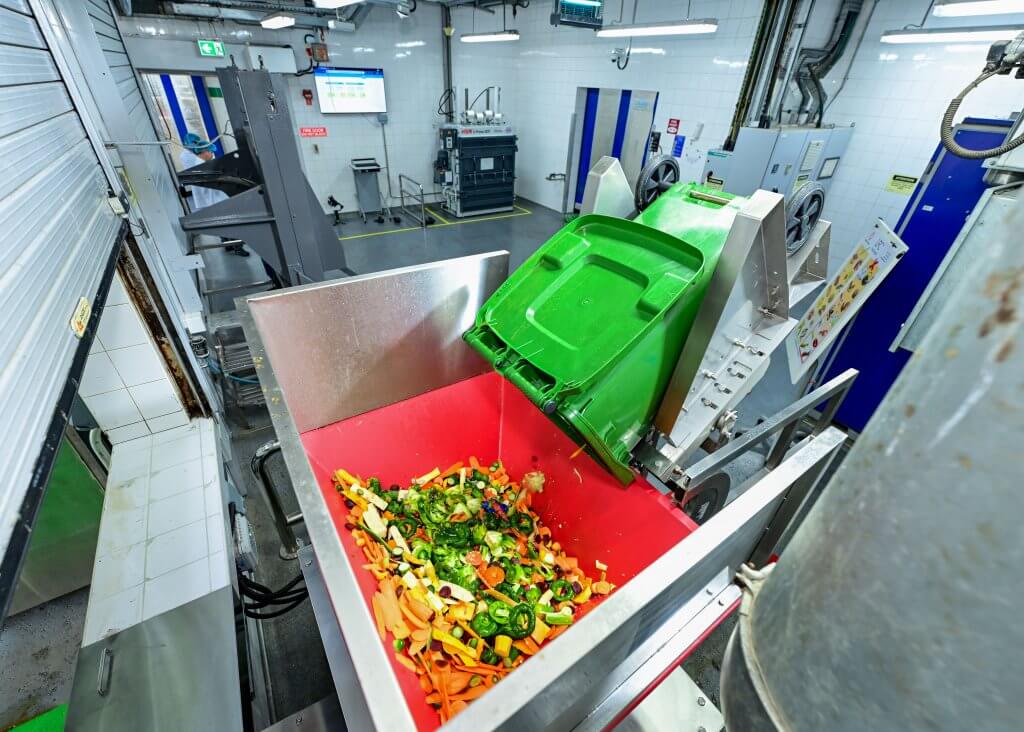
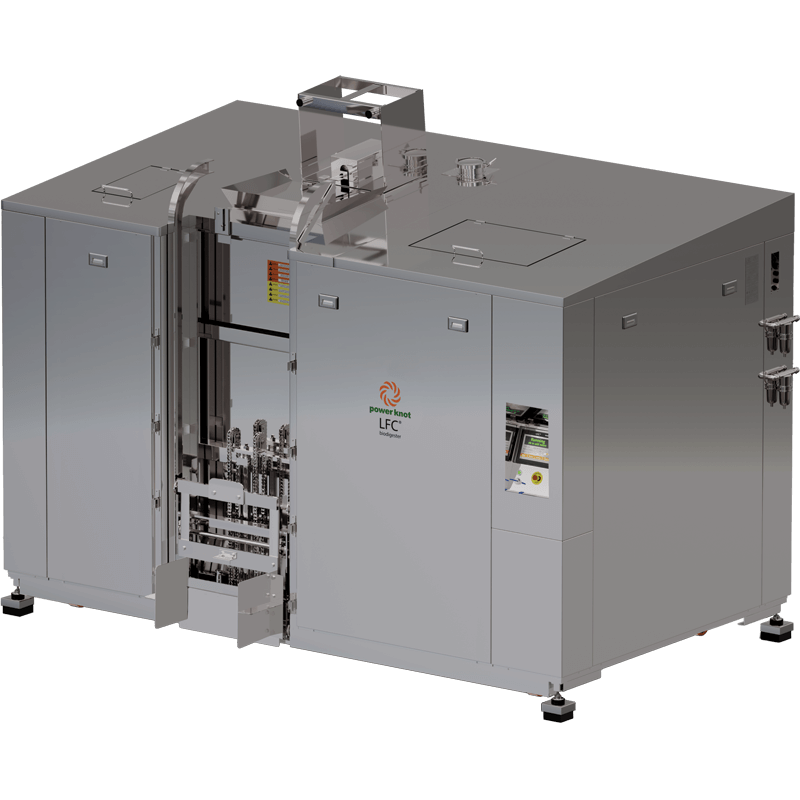
In October 2024, EKFC deployed its first LFC-50 biodigester, enabling the onsite conversion of food waste into grey water. The system uses aerobic digestion, a combination of oxygen, heat, and naturally occurring microorganisms, to break down organic material efficiently. Unlike mechanical waste systems, the biodigester’s performance improves over time as the microbial culture matures, increasing digestion efficiency and reliability.
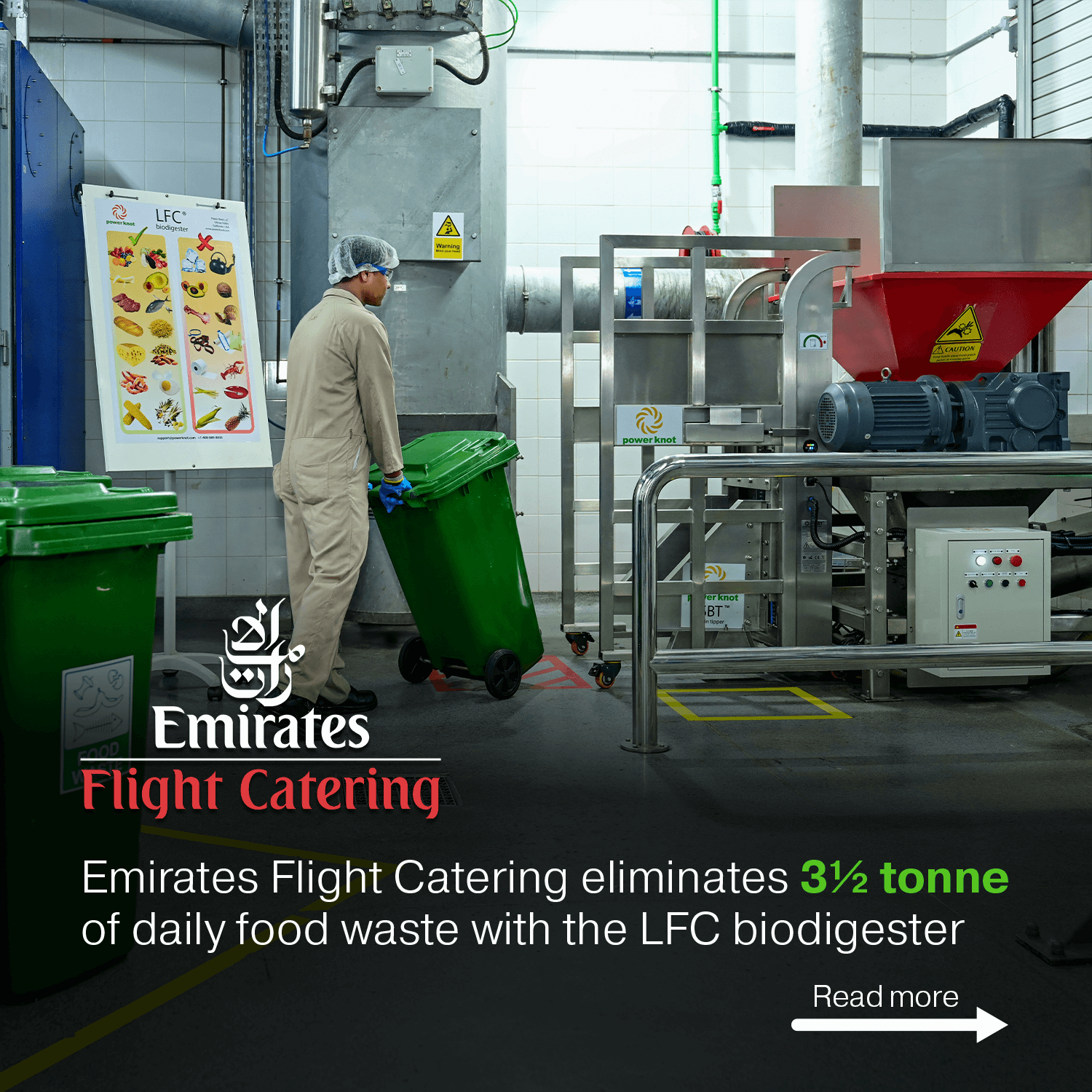
Within a single month, the LFC-50 biodigester processed over 9,300 kg (20,500 lb) of organic waste, consistently operating at more than twice its nominal daily capacity. Over the course of the year, this unit processed 75,000 kg of food waste, validating the system’s performance at scale.Building on this success, EKFC commissioned a high-capacity Power Knot Automated Feed System (AFS) in January 2026. The system integrates:
- SBT-140 bin tipper
- BCG-315 grinder
- FSC-500 screw conveyor
- High-volume LFC biodigester
This synchronized configuration enables EKFC to process over 3 tonne of food waste per day, converting it directly into grey water and entirely eliminating the need for landfill transport.
Supporting Dubai’s Environmental Goals
EKFC’s investment in large-scale food waste digestion directly supports Dubai’s sustainability agenda, which prioritizes waste reduction, resource efficiency, and emissions mitigation.
By treating waste at the source, EKFC eliminates heavy transport to landfills, reduces urban carbon emissions, and sets a new benchmark for sustainable aviation catering. The system’s conversion of food waste into grey water further supports environmentally responsible operations while exceeding regulatory requirements.
Through these initiatives, Emirates Flight Catering demonstrates how large-scale aviation operations can align operational excellence with environmental stewardship—positioning both EKFC and Dubai as global leaders in sustainable urban and aviation development.