
Washington state is on a fast track to more environmentally responsible disposal of organic waste. Under the Use Food Well Washington Plan, legislators have created a roadmap for reducing food waste in landfills by 50% by 2030. This ambitious plan aims to reduce the damaging methane emissions generated by organic waste during the oxygen-free decomposition that occurs in landfills. Beginning with the passage of HB 1799 in 2022, state legislators have built upon this framework with solutions to help businesses and citizens keep food waste out of landfills.
What is Washington HB 1799?
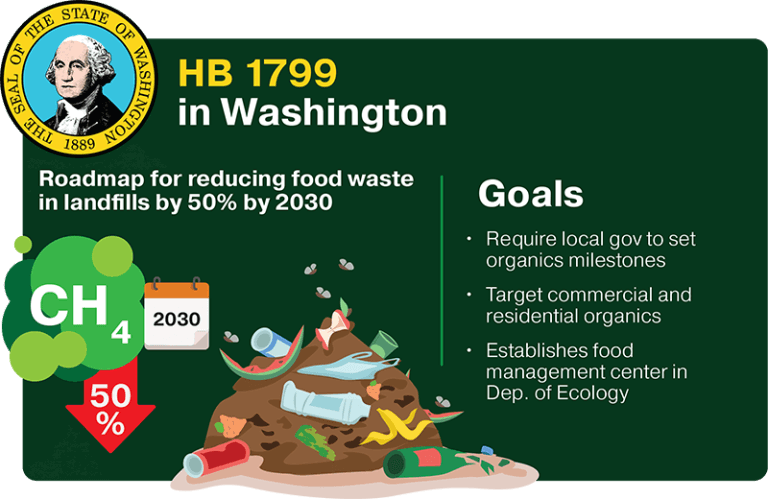
In 2022, the Washington State legislature passed House Bill 1799 (HB 1799) to establish requirements for keeping organic materials out of landfills. The bill, known today as the 2022 Organics Management Law, balances regulatory action with incentives. Download the HB 1799 infographic here.
Among other actions, HB 1799:
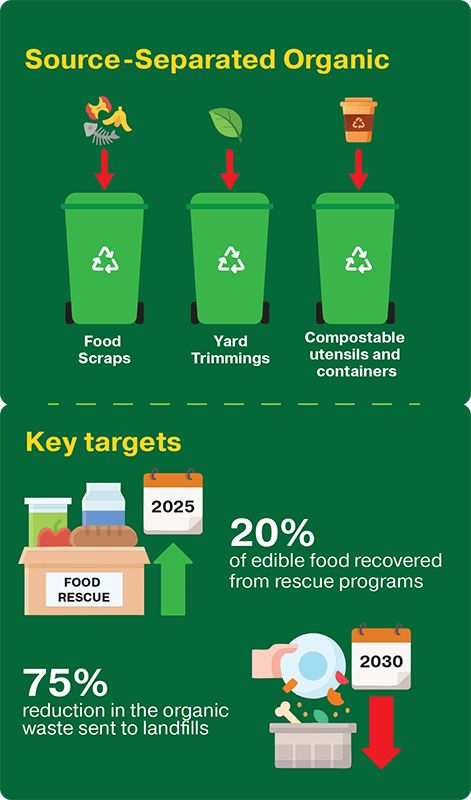
- Demands a 75% reduction in the organic waste sent to landfills across the state by 2030, compared to 2015 waste disposal levels. Local governments are encouraged to divert organic materials from landfills through composting and other organic material management facilities. The law establishes a 20% reduction in the landfill disposal of edible food waste by 2025.
- Requires no less than 20% of the volume of edible food disposed of as of 2015 be recovered for human consumption by 2025 through food rescue programs.
- Requires local governments to establish state organic material management goals and requirements.
- Requires certain food waste-producing businesses to create strategies of keeping organic material waste out of landfills.
- Establishing a state center for sustainable food management within the Department of Ecology to coordinate these efforts.
New Requirements to Come into Effect Under Washington’s HB 1799
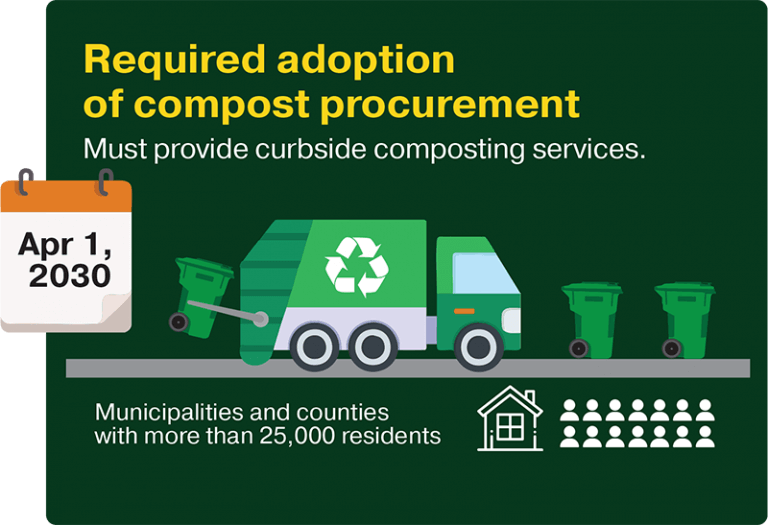
HB 1799 includes several phases to allow businesses and consumers time to adapt organic waste management practices. Those requirements have decreased the waste allowance thresholds by which businesses must arrange for organic waste management services. As of January 1, 2026, businesses generating at least four cubic yards of solid waste per week must keep their organic waste out of landfills.
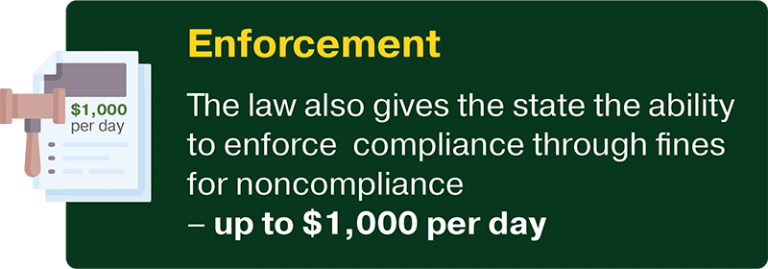
HB 1799 also established a requirement that municipalities and counties with more than 25,000 residents adopt a compost procurement ordinance. These municipalities were given until April 1, 2027, to provide curbside composting services, at least 26 weeks a year, to single-family homes as well as some businesses producing more than 0.25 cubic yards of organic waste. By April 1, 2030, anyone who receives curbside garbage collection services must also source-separate organic waste. The law also gives the state the ability to enforce compliance through fines for noncompliance – up to $1,000 per day of violation.

Challenges with Washington State’s New Compost Law
HB 1799 prioritizes keeping organic waste out of landfills through composting. However, this shift has brought with it challenges accommodating food waste. In fact, a compost market study published in September 2025 by the Washington Department of Ecology found widespread hesitancy to accept food waste among composting collectors.
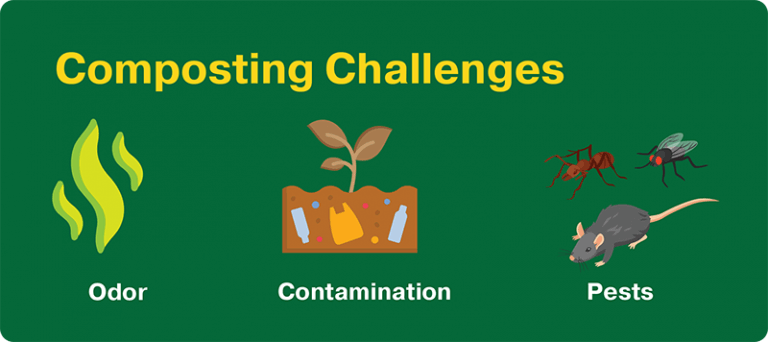
The problem lies in the fact that, unlike yard debris or agricultural waste, post-consumer food waste breaks down more quickly, carries higher risk of contamination, and generates stronger odors if not managed properly. As a result, processing it demands more intensive monitoring. Specialized equipment is required to help control odors. Packaging and other contaminants often slip in, creating bottlenecks in processing.
Moreover, when food waste decomposes in an oxygen-rich environment, it releases nitrogen. To create a useful compost, processors also need debris rich in carbon. This balance of nutrients is essential. However, facility operators reported finding it difficult to find carbon-rich material throughout the year.
Under future updates, the Washington state legislature addresses some of the challenges of composting by opening the possibility of using solutions other than composting to manage organic waste.

How HB 1799 Has Driven Progress in Food Waste Management
HB 1799 set the foundation for how organic waste is managed across Washington State. As various parts of the law became enforceable, legislators identified opportunities for improvement. Subsequent legislation has built upon HB 1799 to expand and simplify compliance.
HB 2301: Food Donation and Recovery Legislation
In 2024, Washington State legislature passed HB 2301 into law to provide financial and logistic tools that would help build upon the progress driven by HB 1799. The new law established a process for awarding grants supporting the implementation of food waste reduction and organic material management policies.
The bill also tightened organic waste disposal laws by changing the timing of organic waste collection to be year-round by April 1, 2027. However, the law also makes space for exemptions. Businesses and municipalities can apply for a waiver in the event they are using food waste disposal technologies capable of reducing the volume, odor, or both, of collected food waste. These exemptions paved the way for on-site technologies capable of breaking down organic waste in an oxygen-rich process that does not generate methane emissions.
HB 1497: Organic Waste Management Improvements
Washington state added new layers to its food waste regulations in July 2025 with HB 1497. The law required that any jurisdictions submitting a draft of their solid waste management plan after July 1, 2026, must include a clear timeline for phasing in services. The law also clarified that municipalities providing organic waste disposal services couldn’t charge residences or businesses that found alternative strategies for managing organic waste in an environmentally responsible manner.
The law also addressed two specific sectors:
- Multifamily: Among other requirements, HB 1497 set requirements to bring multifamily property owners and operators into greater compliance with the new organic waste law. It mandates that state building codes facilitate the collection of source-separated organic materials from new multifamily residential and commercial buildings. It also allows municipalities to require multifamily property owners and operators to provide adequate space for organic waste and recycling collection containers.
- Schools: the new law sets a January 1, 2027, deadline by which school systems leverage existing programs to identify the reduction in food waste, educational best practices, and ways to overcome barriers to the reduction of food waste in schools. This includes developing open educational resources to integrate into existing content standards strategies to help support and prioritize food waste reduction in schools.
The Newest Recycling Law in Washington State
HB 1799 has also prompted legislators to consider other waste categories. For example, the Recycling Reform Act of 2025 puts the responsibility on producers of residential packaging and paper products for the end-of-life management of their products. The state’s focus on waste disposal has identified a greater range of areas where municipalities, businesses, and citizens can take action to better protect the environment.
New Strategies for Organic Waste Disposal
Washington state legislators aren’t the only ones applying a wider lens to the problem of waste disposal. Many organizations are thinking more broadly about how to easily and cost-effectively manage their food waste. As regulations covering the disposal of organic waste become more stringent, organizations are considering on-site technologies like the LFC biodigester.
The LFC biodigesters use aerobic digestion – an oxygen-rich process in which microorganisms break down organic waste into a grey water byproduct – to reduce landfill disposal and greenhouse gas emissions. These machines can be situated directly in the kitchen, making the disposal of food waste easy and odor-free.
Corporations of all types are finding they can simplify the process of organic waste disposal – and gain valuable procurement insight – by investing in data-driven waste management solutions. Municipalities are leading by example by encouraging government bodies to adopt leading-edge on-site organic waste disposal technologies. Local governments and nonprofit organizations can explore funding for solutions that support food waste reduction through the Washington State Department of Ecology.
To learn more about how the LFC biodigester supports a greener Washington, contact Power Knot.