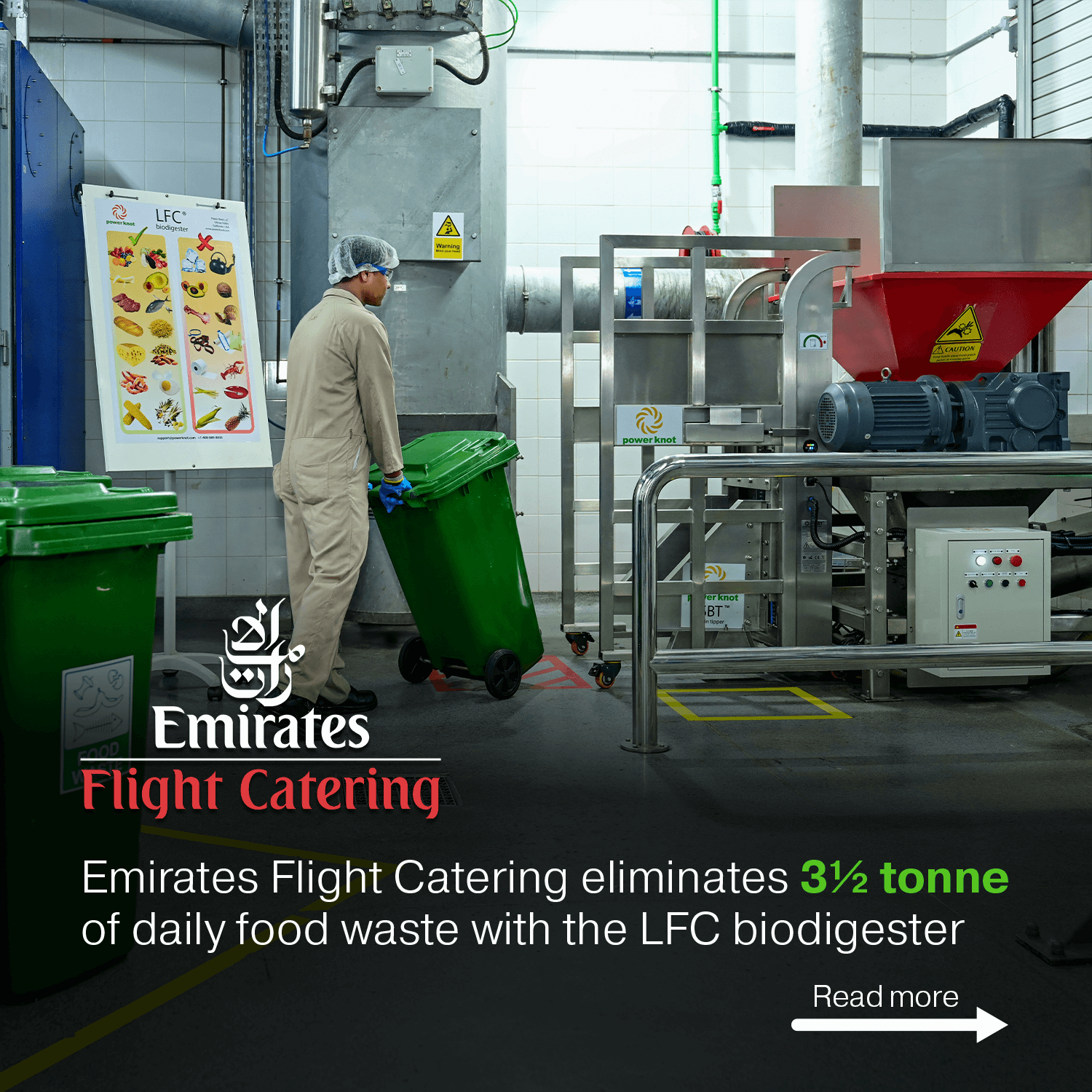

In the modern push toward sustainability, “Integrated Waste Management Systems” (IWMS) has become a buzzword. But for facility managers and sustainability officers, the reality is often complex. While some organizations achieve a seamless, “zero waste” loop, others find themselves stuck with expensive machinery that creates more headaches than solutions.
What separates a successful integration from a costly failure?
Understanding the Integrated Approach
At its core, an Integrated Waste Management System is not just a single piece of equipment; it is a series of technological links designed to work in harmony. It addresses waste from the moment of generation to its final disposal or conversion. By combining sorting, volume reduction, and onsite processing, an IWMS transforms waste management from a logistical burden into a streamlined utility.
The Strategic Advantages of Integration
Why are world-class facilities moving away from simple waste hauling and toward IWMS? The benefits extend far beyond “being green”:
- Reduced Costs: By processing waste onsite, companies can drastically reduce or eliminate reliance on third party hauling services. This protects the bottom line from rising fuel surcharges and landfill tax hikes.
- Unlocking Financial Incentives: A robust IWMS often qualifies an organization for government grants, significant tax breaks, and carbon credits. In many regions, shifting away from landfills isn’t just a means of saving costs—it’s a revenue generator.
- Elevated Brand Equity: Sustainability is no longer just desirable; it is a competitive requirement. Implementing a visible, high-tech waste solution drastically improves branding, signalling to customers and investors that the company is a leader in environmental stewardship.
- Data Tracking: Modern IWMS come equipped with IoT sensors and data metrics. This allows for real time reporting on waste volumes and carbon footprint reduction, which is essential for ESG reporting that can sustain an audit.
The Risks: Where Integration Fails
If the benefits are so clear, why doesn’t every system succeed? There are two primary hurdles:
- High Initial Investment: An IWMS requires a significant upfront commitment of both capital and time for equipment installation and staff training. Without a clear plan for ROI, the initial costs can stall projects.
- The “Complexity Bottleneck”: In a linear system, if one component fails, the entire chain can grind to a halt. If your grinder goes down, your biodigester can’t be fed. This makes equipment reliability the most critical factor in the ROI equation.
The Golden Rule: Single-Source Synchronicity
IWMS typically work best when the entire chain is produced by a single manufacturer. When systems are integrated using parts from different vendors, they often fail to communicate. Misaligned speeds or incompatible software lead to frequent breakdowns. When a system is engineered as a single unit, the motor speeds, weight capacities, and data outputs are perfectly synchronized.
Case Study: Emirates Flight Catering (EKFC)
A prime example of a high-functioning IWMS is currently in operation at Emirates Flight Catering (EKFC) in Dubai—one of the largest catering operations in the world.
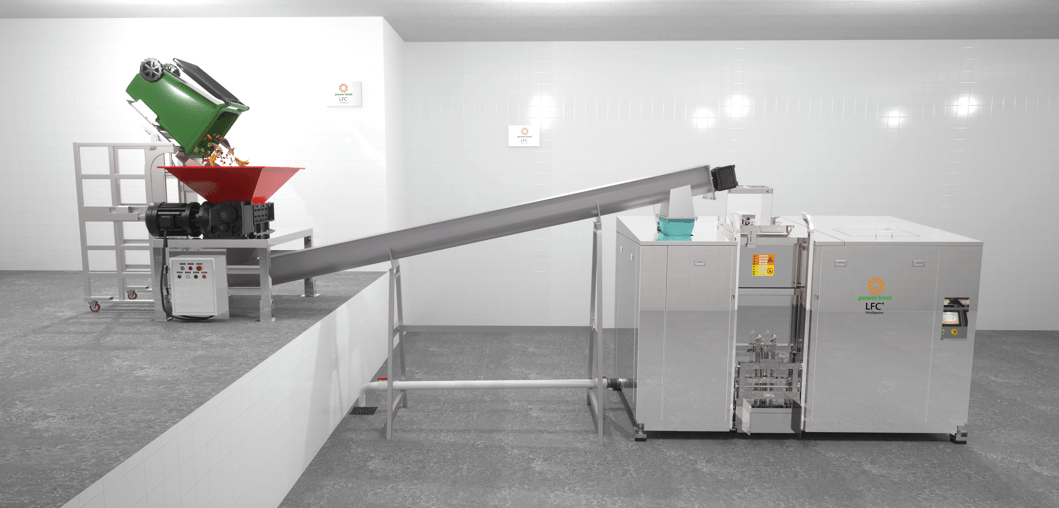
To manage the massive volume of food waste generated by thousands of daily flights, EKFC deployed the Power Knot Automated Feed System (AFS). This isn’t just a single machine; it is a synchronized ecosystem:
- SBT-140 bin tipper: Effortlessly lifts and empties heavy waste bins.
- BCG-315 grinder: Breaks down the organic waste for faster processing.
- FSC-500 screw conveyor: Transports the processed waste directly into the next stage.
- LFC biodigester: The ”stomach” of the system, which aerobically digests the food waste into grey water.
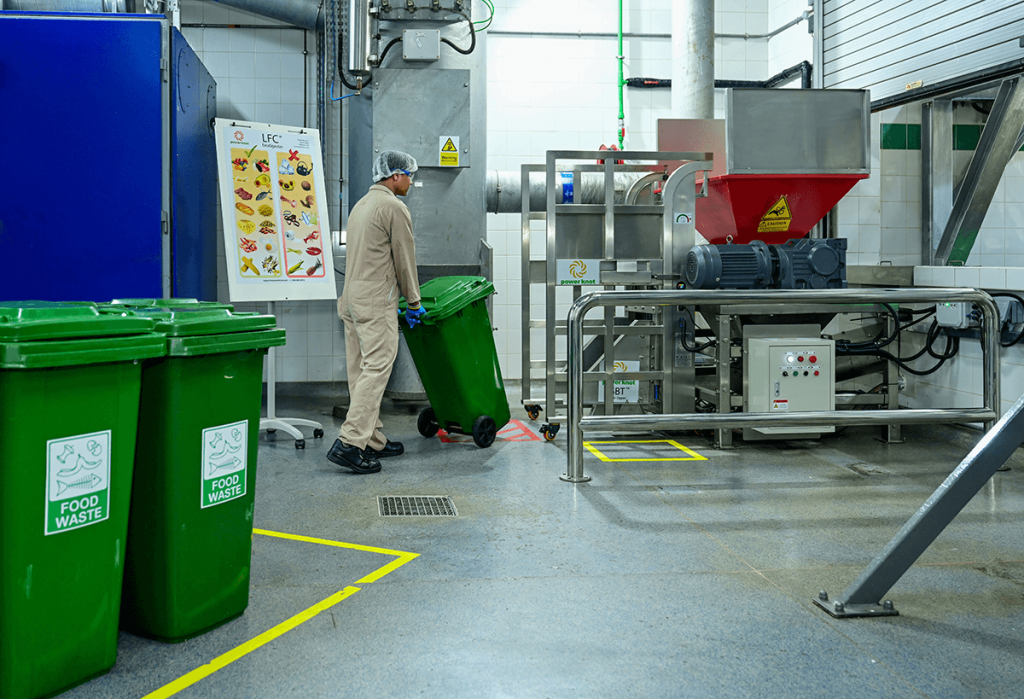
Results: By using a system manufactured by a single supplier, EKFC processes over 3 tonne of food waste daily. They have reduced the need for landfill transport, capturing the brand benefits of a “circular economy” while drastically lowering their carbon footprint.
An integrated waste system is an investment in the future of a facility. While the initial investment is higher than traditional methods, the long-term rewards—from tax incentives to brand loyalty—are undeniable. In the world of waste, the strength of the system is only as good as the weakest link in the chain.
Stop dreaming of sustainability and start implementing it. Contact Power Knot today to learn more about our end to end waste management solutions.