

Introduction to Corporate Social Responsibility (CSR)
Corporate Social Responsibility (CSR) is essential for modern businesses, focusing on ethical practices, environmental stewardship, and social well-being. A strong CSR strategy enhances reputation, attracts talent, and fosters customer loyalty. However, managing Scope 3 emissions is crucial for an effective sustainability plan.
What defines a strong CSR strategy?
- Clear, defined goals: Specific, measurable objectives for focused and trackable initiatives.
- Realistic and achievable: Ambitious yet attainable goals to maintain motivation and momentum.
- Alignment with company values: Ensures authenticity and integration into company culture.
- Meaningful contributions: Address significant social, environmental, or economic issues.
- Employee involvement: Engaging employees increases buy-in and participation.
Sustainability managers are critical change agents that set the tone for a company’s CSR goals. A strong CSR goal is their best tool to create a long lasting, positive impact.
Encompassing Scope 1 and 2 emission goals
Basic CSR goals typically manage Scope 1 (direct emissions from owned sources) and Scope 2 emissions (indirect emissions from purchased electricity). However, a comprehensive sustainability plan must also consider Scope 3 emissions.
What are Scope 3 Emissions?
As noted by the GHG protocol, Scope 3 emissions result from activities not owned or controlled by the organization but indirectly affected in its value chain, including:
- Purchased goods and services
- Business travel
- Employee commuting
- Waste disposal
- Use of sold products
- Transportation and distribution
- Investments
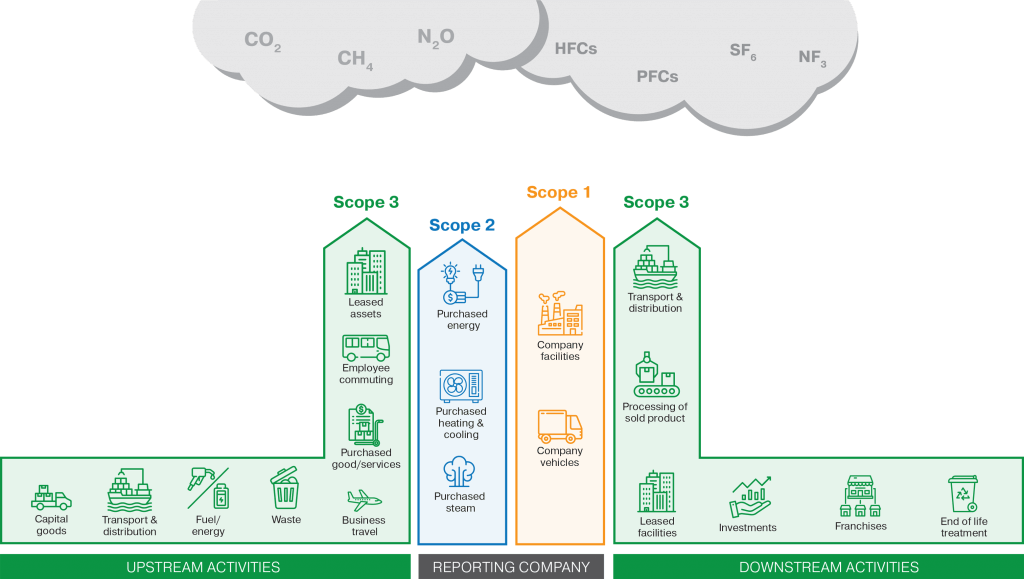
Managing Scope 3 emissions requires a holistic view of the entire value chain and collaboration with stakeholders.
Why should your company care about Scope 3 emissions?
- Comprehensive environmental impact: Often Scope 3 emissions are the majority of total emissions; addressing them is essential for a full sustainability strategy.
- Regulatory and market pressure: Increasing demand for transparency and accountability.
- Risk management: Mitigates supply chain risks like resource scarcity and regulatory compliance issues.
How will caring about Scope 3 emissions make your company stand out?
- Competitive advantage: Differentiates from competitors and attracts eco-conscious stakeholders.
- Enhanced reputation: Builds a responsible and forward-thinking brand image.
- Innovation and efficiency: Leads to process improvements, cost savings, and new opportunities.
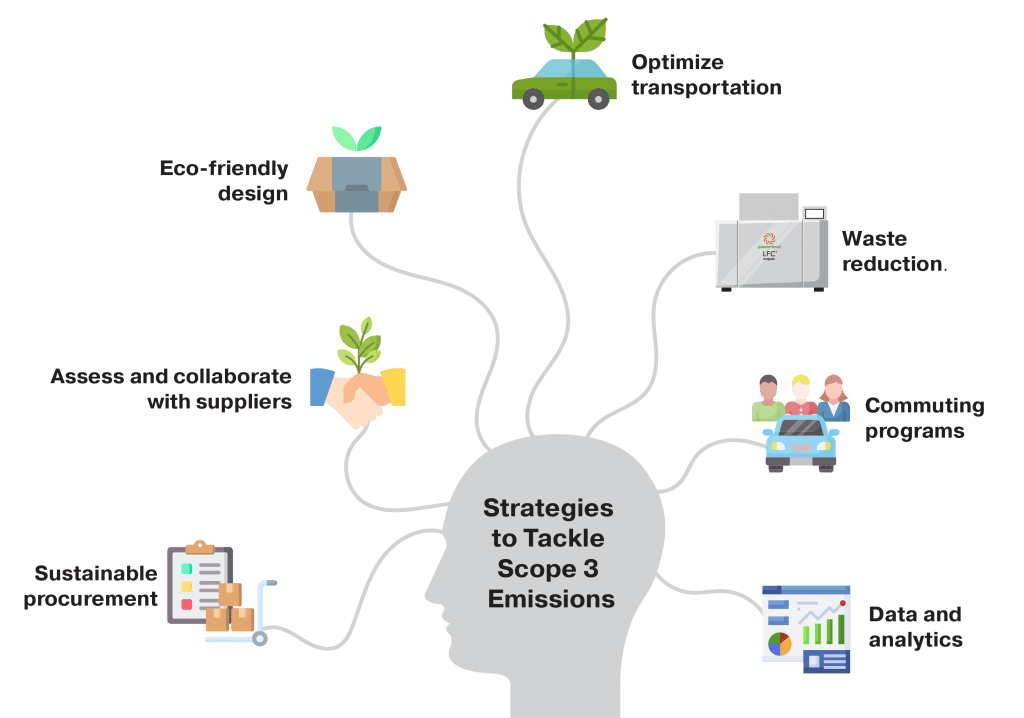
Strategies to tackle Scope 3 emissions
Supplier engagement
- Assess and collaborate with suppliers: Evaluate and reduce suppliers’ carbon footprints.
- Sustainable procurement: Integrate sustainability criteria into procurement and prioritize eco-friendly suppliers.
Product design and lifecycle management
- Eco-friendly design: Use sustainable materials, design for energy efficiency, and plan for recycling.
- Life cycle analysis: Minimize environmental impact across product life stages.
Transportation and Logistics
- Optimize transportation: Use software for route optimization, invest in efficient vehicles, and explore alternative methods.
- Collaboration and consolidation: Share logistics resources and ensure full load shipping.
Employee Engagement and Behavioral Change
- Commuting programs: Encourage commuter programs, remote work, public transportation, and flexible schedules.
- Awareness and education: Provide sustainability training and promote green initiatives.
Waste Management and Circular Economy
- Waste reduction: Implement comprehensive waste management programs and adopt technologies like the LFC biodigester.
- Circular economy practices: Develop product take-back programs and invest in resource recovery technologies.
Technology and Innovation

- Data and analytics: Track and report emissions accurately, identify hotspots, and prioritize reduction efforts.
Managing Scope 3 emissions is critical for a robust sustainability strategy. Companies that address these emissions can enhance their CSR initiatives, reduce environmental impact, and gain a competitive edge, ensuring their sustainability plans are comprehensive and future-proof. Contact Power Knot to start tackling scope 3 emissions today.