

Vital Records Control (VRC) is a national leader in information management, dedicated to protecting the lifecycle of sensitive data for a vast range of clients. From its headquarters in Memphis, Tennessee, VRC has grown into a powerhouse that services over 200 markets across the United States.
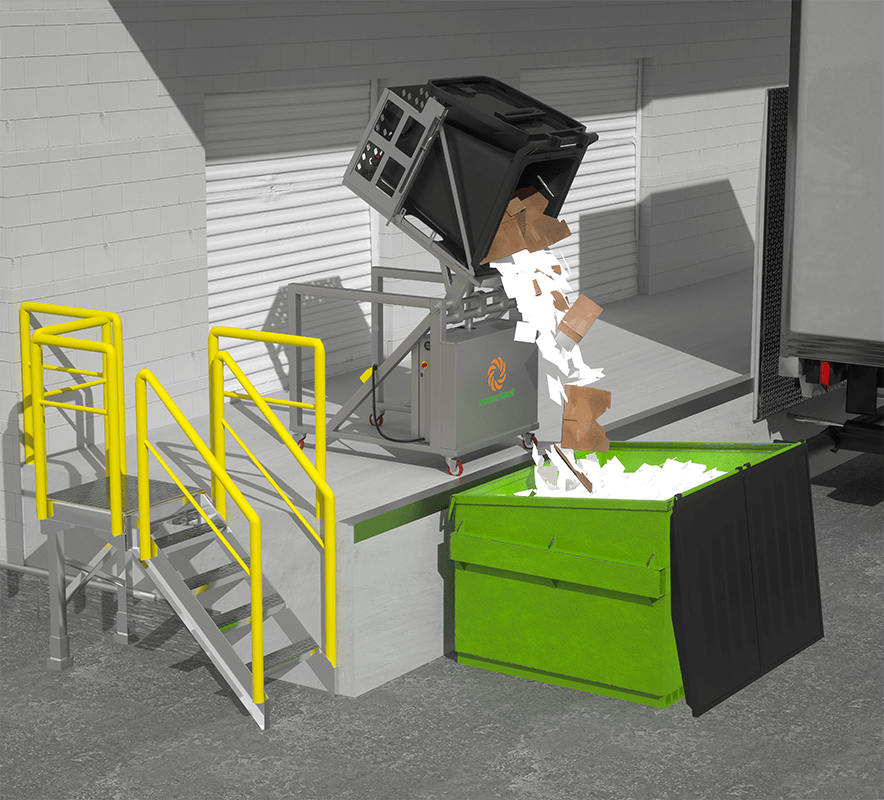
Its expansive footprint ensures that whether a business is located in the bustling centers of California or the rural stretches of the Southeast, VRC provides the local presence necessary for secure, compliant records management. This commitment to reliability recently drove the Newark facility to modernize its operations by transitioning to the SBT-360 bin tipper, a move prompted by the manufacturer’s discontinuation of their previous stationary equipment which had begun to disrupt daily workflows and hinder the company’s ability to scale.
Equipment Obsolescence & Operational Stagnation
Most VRC locations, such as VRC Newark, previously relied on a stationary bin tipper from a manufacturer that eventually ceased production. This led to several direct challenges:
- Loss of Support: The discontinuation meant a lack of technical support and spare parts, creating a high risk of daily operational disruption if a unit failed.
- Scaling Limitations: Without the ability to acquire new units, VRC could not easily expand its capacity or standardize its hardware fleet.
- Stationary Constraints: The legacy units were fixed in place, forcing a rigid workflow that required materials to be brought to the machine rather than the machine being moved to the workload.
Some VRC locations utilized a legacy bin lifting solution which was mobile but had poor battery life and was prone to overloading.
Transitioning to the SBT-360 bin tipper
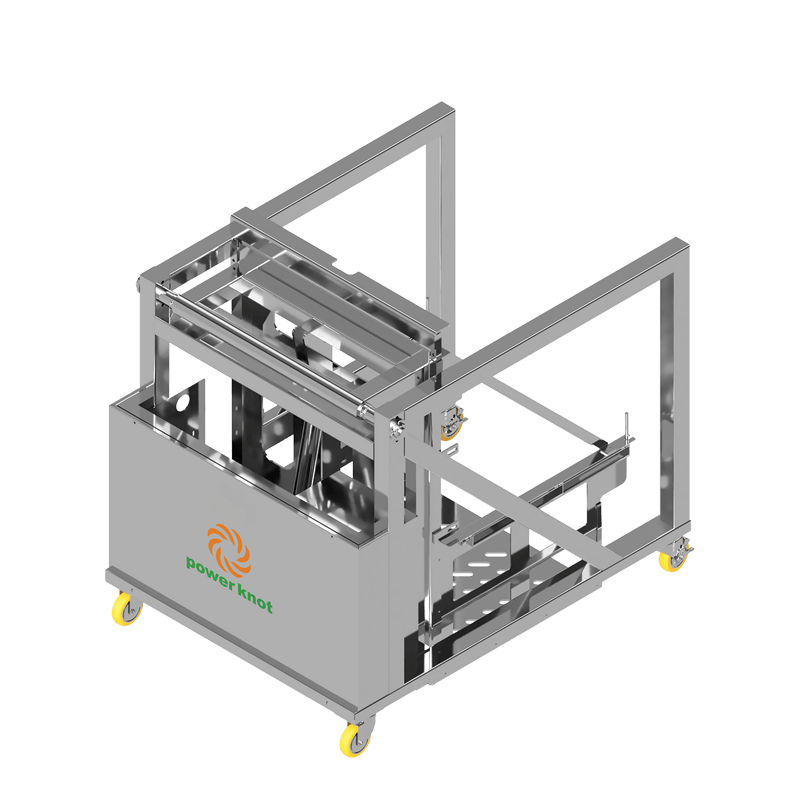
Seeking a modern alternative, VRC evaluated multiple options before finally settling on the SBT-360 bin tipper. The primary driver for this choice was its specific design as a mobile solution compared to the stationary models previously used and the technology of the supplier. The VRC Newark facility is less than 10 miles from the SBT bin tipper manufacturer, Power Knot, with its headquarters in the Silicon Valley, Fremont, California.
Key Operational Advantages
| Feature | Legacy Equipment | SBT-360 bin tipper |
| Mobility | Stationary | Fully mobile |
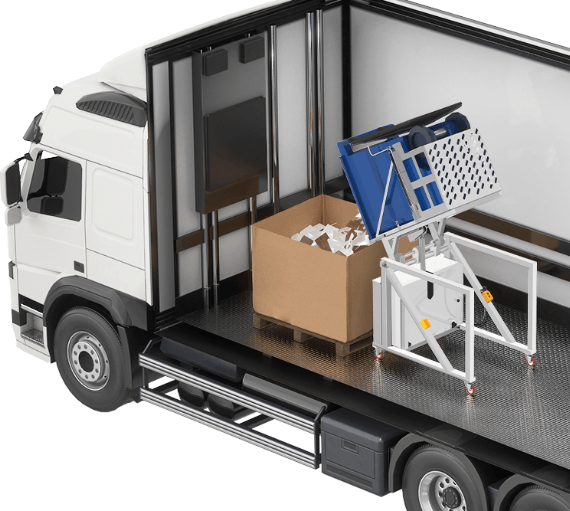
| Operational Reach | Fixed locations | Anywhere in a facility or inside a truck |
| Product Support | Discontinued | Actively supported by manufacturer |
| Power Source | Wall utility connection | Battery with universal AC charging |
Implementation and Impact
Enhanced Flexibility
Workforce Integration and Training
The SBT-360 bin tipper is easy to use, making it a valuable asset for personnel management:
- Rapid onboarding: It has become one of the first tasks taught to new hires, allowing them to become productive members of the team almost immediately.
- Productive workflow: Because of its simplicity, the tipper is often used for busy work, ensuring that staff remain engaged and materials continue to move even during transitional periods in the workday.
Restored Scaling Ability
For Vital Records Control, the SBT-360 bin tipper was not simply a replacement; it was a strategic operational upgrade.
By transitioning from stationary, unsupported equipment to a mobile, manufacturer-supported solution, VRC improved operational efficiency, restored scalability, and enhanced its ability to deliver secure data destruction services across both facility and field environments. VRC recognized the advantages of the SBT-360 bin tipper and has deployed scores of machines throughout the US to ensure it remains competitive and a market leader.
The SBT-360 bin tipper now plays a critical role in supporting VRC’s continued growth while maintaining the reliability, flexibility, and efficiency required of a national leader in secure information management.